
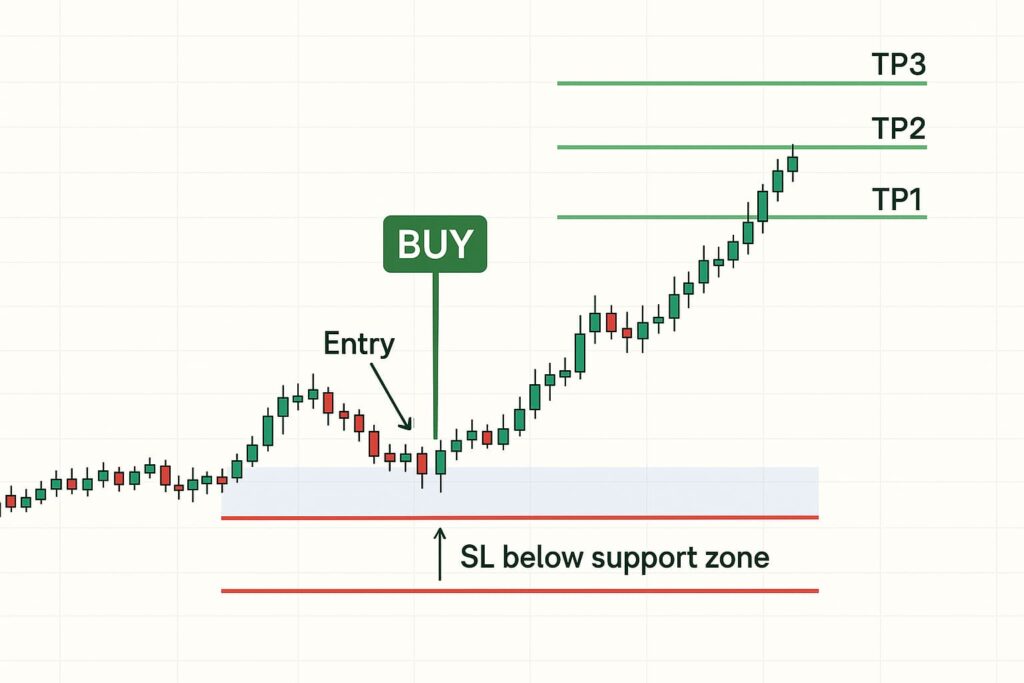
In the dynamic realm of forex trading, where fortunes can shift in mere moments, one tool stands out as the guardian of your capital: the stop-loss. For traders navigating the $7.5 trillion daily forex market, understanding and mastering stop-loss in trading is not just an option—it’s a necessity. Whether you’re a novice trader stepping into the forex arena or a seasoned professional refining your approach, this comprehensive guide will transform your understanding of stop-loss strategies.
What Exactly is Stop-Loss in Trading?
At its core, stop-loss in trading is a predefined exit strategy that automatically closes your trade when the market moves against you, capping potential losses. Imagine you’re trading the EUR/USD pair, entering a buy position at 1.0900. By setting a stop-loss at 1.0870, you’re telling your trading platform, “If the price drops to this level, sell immediately to protect my funds.” This mechanism acts as your financial safety net, ensuring you don’t watch helplessly as a bad trade erodes your account.
Unlike manual exits driven by panic or hope, a stop-loss is a calculated decision made before emotions take over. It’s your silent partner in the forex battlefield, enforcing discipline and safeguarding your investment. Whether you trade on MetaTrader 4, TradingView, or another platform, integrating stop-loss into your forex strategy is the first step toward long-term profitability.
⮕ Get the 7 Hidden Forex Secrets – Free PDF Download
Why Stop-Loss is the Cornerstone of Forex Trading
Many new traders chase the thrill of winning trades, believing that success lies in picking the right market moves. However, the reality is starkly different: sustainable success in forex hinges on managing losses effectively. Here’s why mastering stop-loss in trading is non-negotiable:
-
Capital Preservation: A single catastrophic loss can wipe out months of gains. A stop-loss limits damage to a tolerable level, such as 1–2% of your account.
-
Emotional Detachment: Volatile markets can trigger fear or greed. A stop-loss removes the need to decide in the heat of the moment, sticking to your plan.
-
Longevity in Trading: By cutting losses early, you stay in the game, learning and adapting rather than starting over.
-
Risk Consistency: Regardless of the trade’s allure, a stop-loss ensures your risk aligns with your financial goals.
Consider this: a trader without a stop-loss might hold a losing position on GBP/USD, hoping for a reversal, only to lose 20% of their account. With a stop-loss, that loss could be capped at 1%, preserving capital for future opportunities. This mindset shift is what separates thriving traders from those who burn out.
How Stop-Loss Works in the Forex Market
Let’s dive into the mechanics with a practical example. Suppose you’re trading USD/JPY, entering a buy at 145.50 based on a breakout signal. You set a stop-loss at 145.20, a 30-pip buffer below a recent support level. If the price plummets to 145.20 due to unexpected news, your trade closes automatically, limiting your loss to 30 pips.
Most forex platforms allow you to set a stop-loss during trade entry or adjust it later. For instance:
-
On MetaTrader, right-click your open position, select “Modify Order,” and input your stop-loss level.
-
On TradingView, use the “Stop Loss” option when placing a trade via the chart.
This automation is a game-changer, especially in a 24/5 market where you can’t monitor charts constantly. The key is to set it strategically, balancing protection with market volatility.
Exploring Diverse Stop-Loss Strategies
Not all stop-loss approaches are created equal. Here are four unique strategies to master stop-loss in trading, each tailored to different trading styles:
-
Fixed Pip Stop-Loss
-
How It Works: Set a consistent pip value (e.g., 25 pips) regardless of market conditions.
-
Pros: Simple and uniform, ideal for beginners.
-
Cons: Ignores volatility, risking premature exits in turbulent markets.
-
Best For: Scalpers or those with strict risk parameters.
-
-
Support/Resistance-Based Stop-Loss
-
How It Works: Place the stop-loss just beyond key technical levels, like a swing low for buys or a swing high for sells.
-
Pros: Aligns with market structure, offering logical exits.
-
Cons: Requires chart analysis skills to identify levels accurately.
-
Best for swing traders leveraging technical analysis.
-
-
Dynamic Trailing Stop-Loss
-
How It Works: Adjusts upward (for buys) or downward (for sells) as the price moves in your favor, locking in profits.
-
Pros: Maximizes gains during strong trends.
-
Cons: May exit too early in sideways markets.
-
Best For: Trend followers aiming to ride big moves.
-
-
Volatility-Adjusted Stop-Loss
-
How It Works: Uses indicators like Average True Range (ATR) to set stops based on current market volatility (e.g., 2x ATR below entry).
-
Pros: Adapts to market conditions, reducing false triggers.
-
Cons: Wider stops can increase risk exposure.
-
Best For: Traders in high-volatility pairs like GBP/JPY.
-
Experiment with these on a demo account to find your fit. For instance, a volatility-adjusted stop might save you during a news-driven spike, while a trailing stop could secure profits on a 100-pip EUR/USD rally.
Pitfalls to Avoid with Stop-Loss in Trading
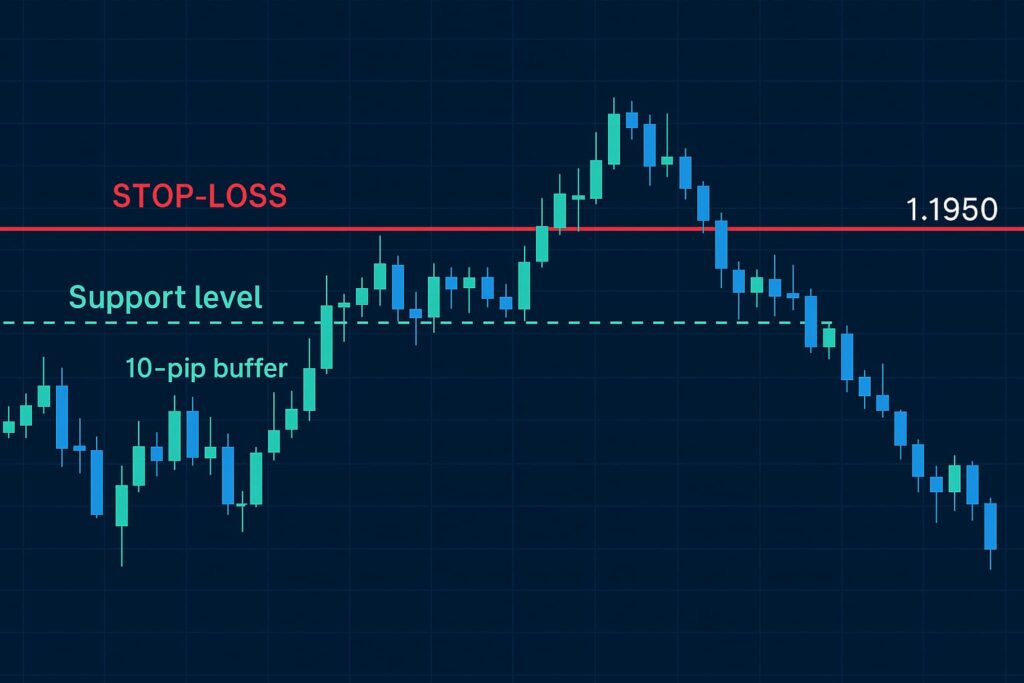
Even the best tools can backfire if misused. Here are common mistakes and how to sidestep them:
-
Setting Stops Too Tight: A 10-pip stop on a volatile pair like AUD/USD can trigger on normal fluctuations. Give it breathing room (e.g., 30–50 pips).
-
Moving Stops Out of Fear: Resisting the urge to widen a stop-loss during a dip prevents small losses from becoming disasters.
-
Ignoring Position Sizing: If your stop is 40 pips away, adjust your lot size to risk only 1–2% of your account (e.g., $20 on a $1,000 account).
-
Skipping Stop-Loss Entirely: Trading without one is like driving without brakes—thrilling until the crash.
A real-world example: A trader sets a tight 15-pip stop on USD/CAD during a central bank announcement, only to be stopped out by a 20-pip spike. A wider, volatility-based stop would have weathered the storm.
⮕ Get the 7 Hidden Forex Secrets – Free PDF Download
Crafting a Smart Stop-Loss Plan
To harness stop-loss in trading effectively, follow this proven framework:
-
Analyze Technical Levels: Identify support (for buys) or resistance (for sells) using tools like Fibonacci retracements or pivot points.
-
Add a Buffer: Extend your stop by 5–15 pips beyond the level to avoid being “wicked out” by market noise.
-
Calculate Risk: Ensure your position size keeps risk at 1–2% of your account. For a $5,000 account, risk $50–$100 per trade.
-
Commit to the Plan: Once set, resist tweaking unless new data justifies it.
Example: On a buy at 1.2000 on GBP/USD, place a stop at 1.1950 (below support at 1.1960, plus a 10-pip buffer), risking 50 pips. Adjust lot size to risk $50 on a $5,000 account.
Power of Risk-Reward with Stop-Loss
Stop-loss isn’t just about cutting losses—it’s about setting the stage for profits. The golden rule is a 1:2 risk-reward ratio or better. If you risk 30 pips, target 60+ pips in profit. This approach means you can lose 50% of your trades and still profit overall.
For instance, on a EUR/USD trade:
-
Entry: 1.1000
-
Stop-Loss: 1.0970 (30 pips risk)
-
Take-Profit: 1.1060 (60 pips reward) Even with a 40% win rate, you’d net gains over time. Most traders fail by chasing 20-pip gains with 50-pip risks—reversing this mindset is key to forex mastery.
Is Stop-Loss Essential for New Traders?
Absolutely. Without unlimited capital or supernatural foresight, every trader needs a stop-loss. Even pros at top firms use it religiously. The goal isn’t to win every trade but to survive long enough to refine your skills. A beginner skipping stop-loss might lose $500 in one trade, while a 1% risk limit ($5 on a $500 account) keeps them in the game.
Start with a demo account to practice. Set stop-losses on every trade, track results, and adjust based on performance.
Stop-Loss as Your Trading Lifeline
Mastering stop-loss in trading is the foundation of a resilient forex career. It won’t guarantee wins, but it ensures you don’t lose everything. By integrating strategic stop-loss placement into your forex approach, you build confidence, protect your capital, and pave the way for consistent success.
Begin today: test these strategies on a demo account, apply them to your next live trade, and share your progress in the comments. For more forex insights, explore our trading strategies guide or connect with us on X for real-time tips. Trade smart, stay disciplined, and let stop-loss be your key to forex triumph!
Disclaimer: Forex trading involves high risk. Trade only with funds you can afford to lose, and consult a financial advisor.
⮕ Get the 7 Hidden Forex Secrets – Free PDF Download